

by Alicia Souares, Jamaica
Active learning has become one of the most effective strategies I use in my classroom. As a teacher with 33 students, I have learned that students learn best when they are actively involved in the lesson rather than simply listening to instructions. Practical active learning allows students to explore, discover, and participate in meaningful ways that strengthen their understanding and keep them engaged.
Creating an Active Learning Environment
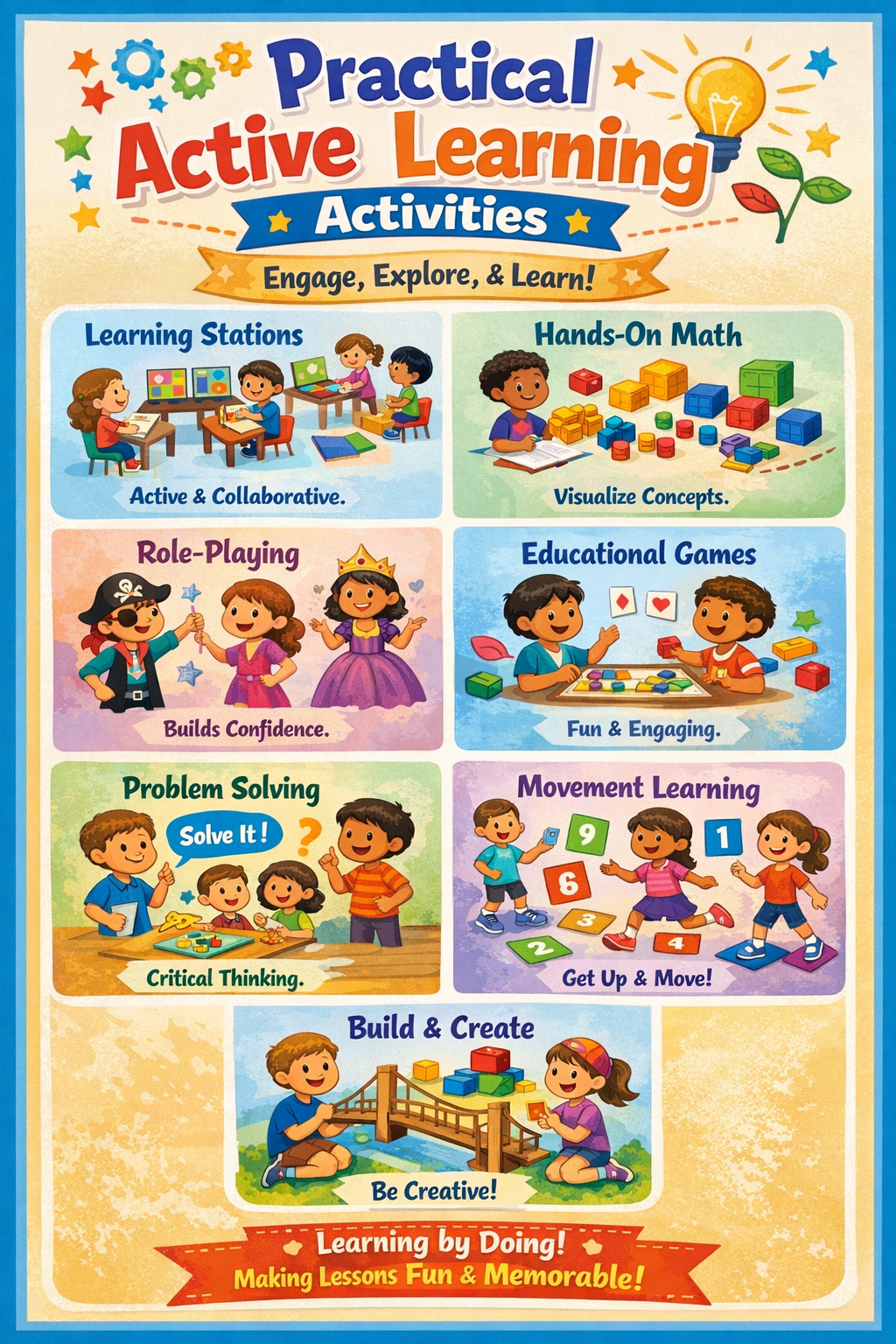
In my classroom, learning is not limited to books and worksheets. I intentionally design lessons that encourage students to move, talk, build, explore, and think critically. With a class of 33 students, keeping everyone engaged can be challenging, but practical activities help ensure that each child participates.
I organize students into small groups, learning stations, and hands-on tasks. These activities allow students to collaborate, solve problems, and learn from one another. When students are physically and mentally involved in the learning process, they are more likely to remember what they have learned.
Hands-On Learners in My Classroom
Three students in my class—Kyjay, Lemar, and Zuri—have taught me the importance of practical learning. These students especially enjoy hands-on activities and often show greater focus and enthusiasm when they are able to manipulate objects, build models, or participate in interactive tasks.
For example, during mathematics lessons, instead of only solving problems on paper, I use manipulatives such as counters, blocks, and fraction pieces. Kyjay, Lemar, and Zuri quickly become engaged when they can physically move the materials to solve the problems. Their understanding improves because they can see and touch the concepts being taught.
Similarly, in language lessons, I incorporate word games, sorting activities, and role-playing exercises. Zuri enjoys arranging words into sentences, while Kyjay and Lemar are eager to participate in group demonstrations and interactive storytelling.
Benefits for the Entire Class
Although these strategies particularly support Kyjay, Lemar, and Zuri, they benefit the entire class. With 33 students, active learning helps maintain attention and encourages participation from students with different learning styles.
Some of the practical strategies I use include:
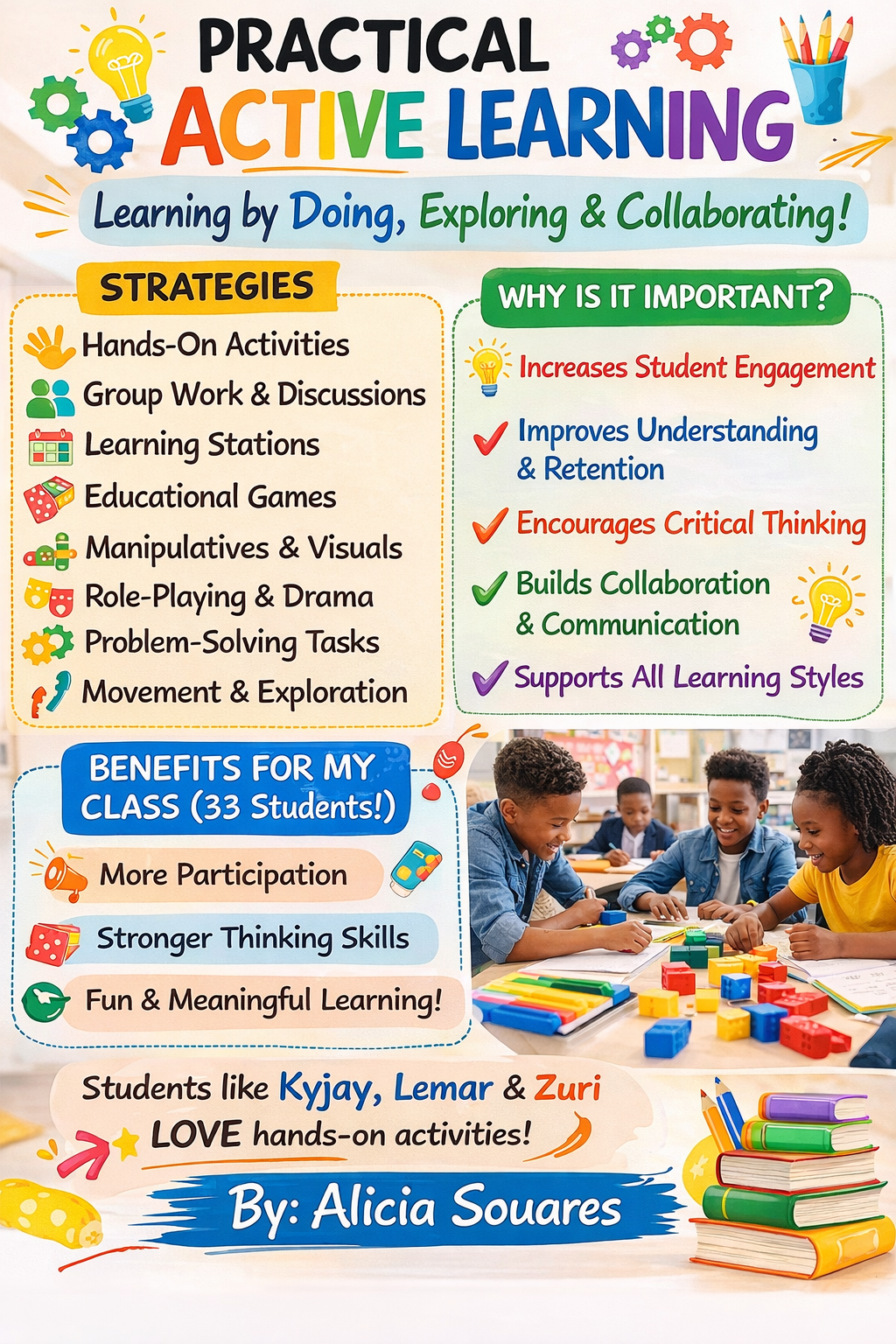
- Learning stations with different tasks
- Educational games
- Group problem-solving activities
- Role-playing and dramatization
- Manipulatives and visual aids
- Movement-based learning activities
These approaches help students build confidence, collaboration skills, and deeper understanding of the subject matter.
Reflection
Implementing practical active learning has transformed my classroom. I have observed increased enthusiasm, stronger participation, and improved comprehension among my students. Students like Kyjay, Lemar, and Zuri remind me that learning should be engaging, meaningful, and interactive.
With a class of 33 unique learners, practical active learning ensures that every student has the opportunity to succeed. By creating opportunities for students to actively participate in their learning, I am helping them develop not only academic skills but also curiosity, creativity, and a lifelong love of learning.
Alicia Souares
Educator from Jamaica
