As a headteacher and Commonwealth Education Trust Ambassador, I’ve always been passionate about professional development that genuinely transforms teaching practice. The Teach2030 platform consistently delivers courses that equip educators to meet 21st century learning challenges. When the “7 Formative Assessment Strategies” course launched, I knew my entire teaching team needed to embrace this opportunity.
A Collective Learning Experience
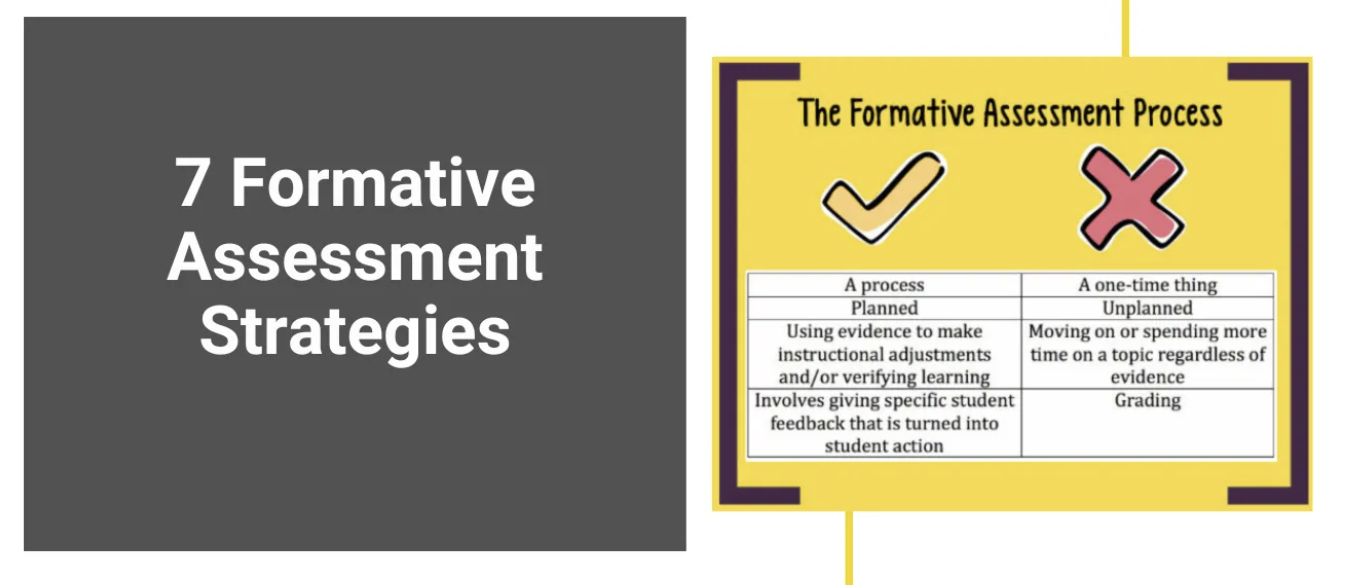
I didn’t just recommend the course—I enrolled alongside every member of our teaching staff at our early years and elementary school. This collective learning journey has been profound. The course explored seven powerful strategies: quiz questions, one-minute timer, exit questions, Fist to Five, RAG (Red, Amber, Green), 4-fingers, and word challenge. Three have become cornerstone practices in our school, fundamentally shifting how we understand and respond to student learning in real-time.
The One-Minute Timer: Capturing Thinking in Real-Time
The one-minute timer—or “60-second brain dump”—has become one of our most frequently used formative assessment tools. Students have exactly one minute to write everything they know, think, or wonder about a particular concept. The time constraint liberates them from pressure for perfection, allowing thinking to flow naturally.
For our teachers, these snapshots have become invaluable. A quick scan reveals misconceptions we might otherwise miss and shows which concepts have truly landed. One of our Year 2 teachers recently discovered through a brain dump on subtraction that several students were still thinking additively—an insight that completely reshaped her next lesson.
The strategy has enhanced our ability to personalize learning. We can quickly identify which students need additional support and differentiate in the moment rather than waiting for formal assessments. Our planning has become more responsive and precise as a result.
Exit Questions: Closing the Loop on Learning
Exit questions have become integral to our lesson structure across the school. As students transition from one learning experience to another, we pose carefully crafted questions requiring them to demonstrate understanding of key concepts.
We’ve learned that question quality matters enormously. Well-designed exit questions ask students to apply, analyze, or synthesize their learning rather than simply recall information. Our teachers have become increasingly skilled at crafting questions that genuinely reveal understanding.
The feedback loop created by exit questions has transformed our teaching. When we review student responses, we have clear evidence of what worked, what didn’t, and what needs revisiting. This has made our planning more intentional and targeted. For students, exit questions reinforce that every learning experience has purpose and closure, building metacognitive awareness we hope to cultivate in young learners.
Fist to Five: Empowering Student Voice
The Fist to Five strategy has been revelatory in building student agency and developing growth mindset. This self-assessment tool asks students to hold up fingers indicating their understanding level: 0 (fist) means “I don’t understand at all,” progressing through levels of need for help, practice, and explanation, to 5 meaning “I completely understand and could teach someone else.”
What makes this strategy effective is its transparency and immediacy. In seconds, teachers can gauge understanding across the entire class. More importantly, students learn to accurately assess their own comprehension—a critical skill for becoming independent learners.
Fist to Five creates a classroom culture where uncertainty is normalized and seeking help is encouraged. When students hold up two fingers, they’re exercising agency by identifying what they need to move forward. When showing five fingers, they’re signaling readiness to support peers.
The strategy powerfully validates growth mindset principles. Students recognize that understanding exists on a continuum and that moving from a two to a four represents real progress. They’ve become more comfortable with the learning process, understanding that confusion and clarity are both natural parts of growth.
The Impact: Confident, Independent Learners
Since implementing these strategies systematically, we’ve observed meaningful changes in both teaching practice and student learning. Our teachers are more attuned to student thinking, more responsive in their instruction, and more confident in meeting diverse needs.
Most importantly, we’re seeing impact on our students. They’re developing greater awareness of their own learning processes, becoming more articulate about what they understand and what they need. They’re taking ownership of their learning journey rather than passively waiting for adults to direct every step.
This independence and confidence are precisely what 21st century learners need. Formative assessment strategies aren’t just helping us teach better—they’re helping our students learn how to learn.
An Invitation to Fellow Educators
The “7 Formative Assessment Strategies” course has validated some techniques we were already using while significantly broadening our approach. It provided theoretical frameworks and practical refinements that elevated occasional tactics to systematic practice.
To my fellow educators: I encourage you to take this journey, and even more powerfully, take it alongside your colleagues. The conversations, shared discoveries, and collaborative problem-solving will amplify the impact many times over. Our schools deserve teachers who are continuously learning, and our students deserve the dynamic, responsive teaching that comes from it.