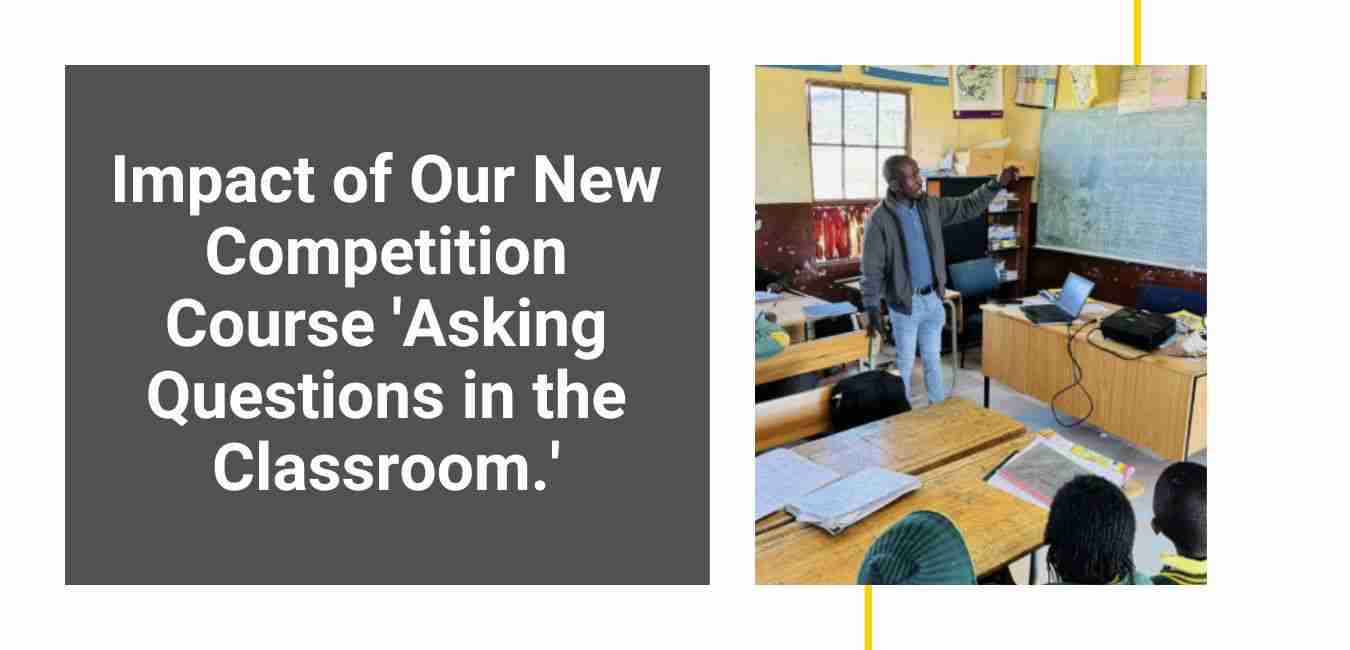
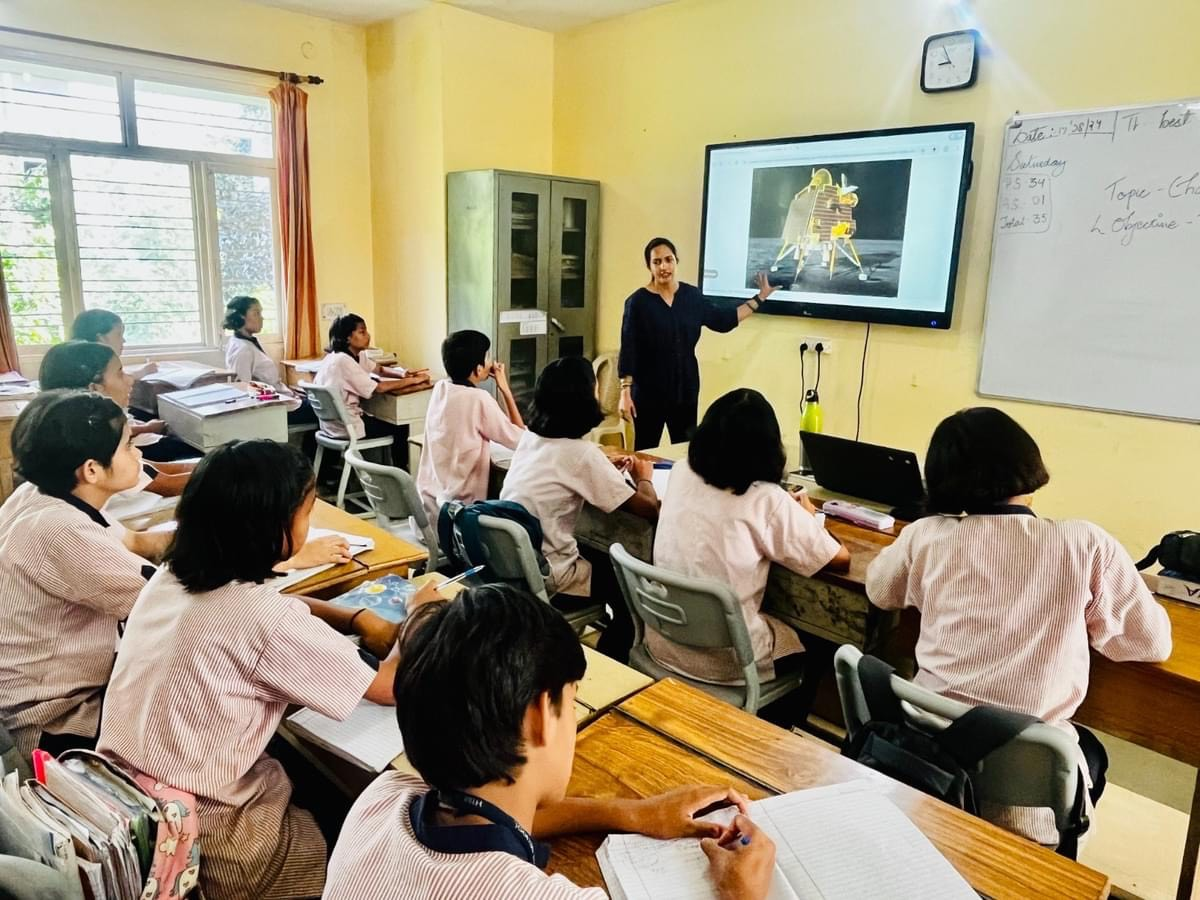
Our new competition course ‘Asking Questions in Your Classroom’ is completely free! It encourages you to use more effective questions by considering what a question is and consider its purpose in the classroom. Learn about different types of questions, including open and closed, before discussing Bloom’s Taxonomy. Hear about scaffolding, which is the process of breaking down learning through creating building blocks. All our courses encourage you to reflect on classroom practice, with this one helping you to create purposeful questions to promote learning!
We are delighted that so many teachers have taken it already and hear is what some of them said about the course!
Understanding the Importance of Scaffolding in the Classroom
In my journey as an educator, I have come to appreciate the role that scaffolding plays in the learning process. Scaffolding has provided me with an avenue to develop my learner’s skills and knowledge in the subject I teach. It has enabled me to break down learning into manageable chunks and provided the necessary guidance to help the students progress from basic understanding to more complex cognitive levels.
To implement effective scaffolding in my classroom, I plan to utilize Bloom’s Taxonomy as a framework to guide my students from lower-order to higher-order thinking skills. The course explanation of Bloom’s Taxonomy will aid me in applying the six cognitive skills: Remember, Understand, Apply, Analyze, Evaluate, and Create when teaching, by structuring my lessons around this framework, I can create a clear roadmap that not only enhances comprehension but also encourages critical thinking and creativity of the learners.
Engaging Students with Targeted Questions
I will begin my instructional process with close-ended questions. Questions that have a specific and straightforward answer—such as yes or no, or a single fact. Using these questions will allow me to gauge my student’s prior knowledge and understanding of the topic at hand, providing immediate feedback on students’ foundational knowledge and helping me identify any gaps early on.
Once I have assessed their initial understanding, I will transition to open-ended questions, questions that invite students to think deeper and articulate their thoughts, promoting class discussion and fostering a collaborative learning environment. I hope to encourage my students to engage critically with the material, consider multiple perspectives, and relate their learning to real-world issues, firmly fixing in their young minds the lesson taught.
This approach will enable me to improve on creating better lesson plans and promote active learning in the classroom. When students participate in discussions, they take ownership of their learning process, which can significantly enhance their retention and understanding. Moreover, this method encourages a classroom atmosphere of curiosity and exploration.
I aim to build strong relationships with my students. Where their opinions are valued and their thoughts contribute to the class.
In summary, embracing scaffolding through Bloom’s Taxonomy and structured questioning not only promotes higher-level thinking but also cultivates an enriching learning environment. I am excited to put these strategies into practice and witness the growth and engagement of my students as they navigate their educational journeys.
Oluwatosin, class teacher, Nigeria
Now I prefer asking more of open ended questions rather than asking close questions to draw attention of the students. This strategy has made my classes more involved and helps students to develop their critical thinking.
Shilpa Kala, class teacher, India
I now think how to plan for students asking more questions. I use the strategies shared.
I used the ‘Wall questions’ – this worked very well. Also ‘Think-Pair-Share’.
Students are now the ones asking the questions, which is important in my subject.
I like the way the strategies for getting students to answer questions – the ‘wall strategy ‘ is one that I can see working well. The ‘No hands-up strategy works very well. I will try re-phrasing my responses to students questions in class. I will plan my lessons using higher level thinking question words.
I use “no hands-up’ I have started lesson planning with higher level question words written in.
It allows for higher level thinking, and I am able to see it taking place more easily. Think-Pair-share also is a good activity for group discussion and it keeps the students focused.
To provide the best experiences, we use technologies like cookies to store and/or access device information. Consenting to these technologies will allow us to process data such as browsing behaviour or unique IDs on this site. Not consenting or withdrawing consent, may adversely affect certain features and functions.
Functional
Always active
The technical storage or access is strictly necessary for the legitimate purpose of enabling the use of a specific service explicitly requested by the subscriber or user, or for the sole purpose of carrying out the transmission of a communication over an electronic communications network.
Preferences
The technical storage or access is necessary for the legitimate purpose of storing preferences that are not requested by the subscriber or user.
Statistics
The technical storage or access that is used exclusively for statistical purposes.The technical storage or access that is used exclusively for anonymous statistical purposes. Without a subpoena, voluntary compliance on the part of your Internet Service Provider, or additional records from a third party, information stored or retrieved for this purpose alone cannot usually be used to identify you.
Marketing
The technical storage or access is required to create user profiles to send advertising, or to track the user on a website or across several websites for similar marketing purposes.