
The topic of assessment for teachers is wide-reaching and can be a bit over-whelming when we have multiple students to assess on all different levels.
Assessment ranges from immediate, formative feedback in the classroom to summative assessment of tests or key pieces of work.
As teachers it is our duty to move students forward and prepare them for their final examinations, so we need to be continually assessing how best to do that.
When we teach a lesson, we need to know whether what we are teaching is being learned and understood effectively by our students, and if not, we need to assess where there may be stumbling blocks and how we can do things differently to adapt to various learner styles and attainment.
On a day-to-day basis, formative assessment may be in the form of question and answers, quizzes or exercises to demonstrate understanding. This allows us to see how far we need to stretch our higher attainers and how much support other students may need. It allows us to work out how far we can progress or whether we need to slow down and return to areas of learning.
When we collect students’ work in, we have quite a mammoth task ahead of us to assess all the books but it is up to us to be smart about assessment and find effective ways to give meaningful feedback as well as a progress check.
It can be effective to rather than mark every single thing in student’ exercise books, to identify which piece to the students that you will be assessing in detail and then mark this piece of work closely, giving personal feedback to individual students on what they are doing well and what they could do to make the piece of work even better.
Following on from marking books, it is also important for students to return to the assessed piece of work and allow time to reflect and work on your feedback and comments, enabling them to understand where they need to improve and how to do so.
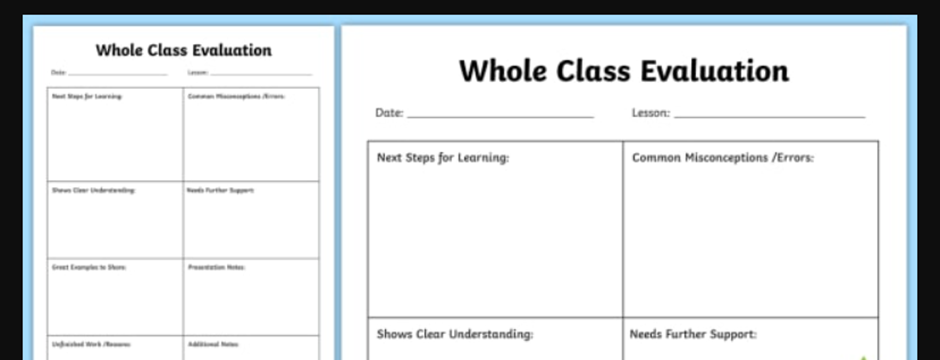
Alternatively, you could give “whole class feedback”, where on a separate piece of paper you make notes as you work through the class set of books. You could note down particular strengths, repeated issues that students may have, particularly credit-worthy pieces of work and so forth. You could then set this one sheet out in a student friendly manner and give each student a copy. This will save you time; instead of writing a comment in every single student’s book you would only have to write it out once.
At the end of units or even at the end of a term, this is where we employ summative assessment. A final test of the students’ learning of that programme of study. This is where we would use exam conditions so students work independently, following which you would collate the results of your group and then use this data to inform your future planning and preparation.
You may like to analyse particular trends in the data; where have students achieved most successfully or least successfully? Is there a particular pattern in the learning which may need to be addressed?
Assessment is a key strategy in teaching; it may even be part of your contract to ensure that students are regularly assessed and reported on. The school and the parents should have up to date feedback about student progress and ultimately their progression.
We need to ensure that assessment is a key element in our approaches to teaching and learning.
Improve your lesson planning with Teach2030

The Importance of Effective Lesson Planning
The importance of Effective Lesson Planning will help you to understand the importance of having a lesson plan, how to formulate effective lesson objectives using the SMART method and strategies for effective lesson delivery and the importance for reaching all learners.
–

Planning Lessons to Reach All Learners: Part 2
Continue developing your planning skills to ensure successful learning outcomes for all your learners.

Planning Lessons to Reach All Learners: Part 1
Good planning ensures ALL your learners benefit. Take our course today to reflect on your planning and how you can improve.
