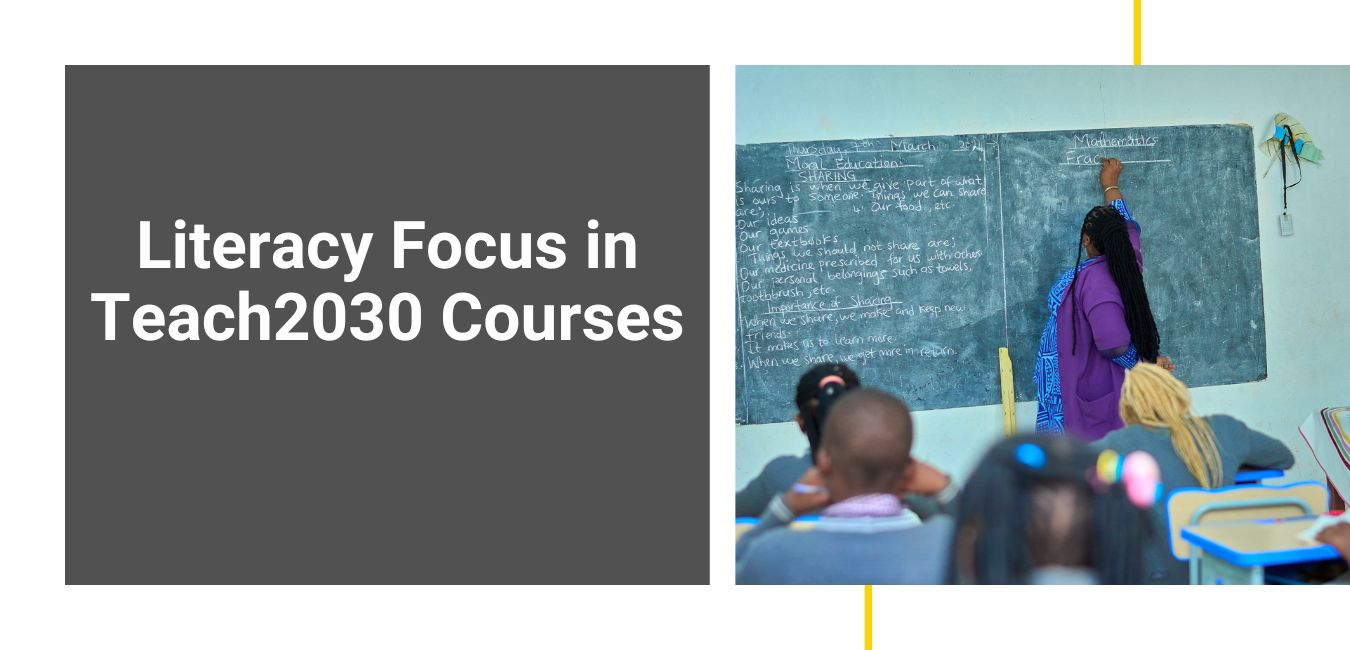
As teachers, we have all been there. We stand at the front of a crowded classroom, chalk in hand, watching our pupils work hard to copy sentences from the board. Does this mean that they are literate? Surely, if a child can read a paragraph or write their name, we can assume they are literate.
Literacy is more than just reading words on a page; it is the absolute baseline requirement that lets children make sense of the world, express ideas, and progress successfully across all subjects. To build a truly inclusive classroom where no learner is left behind, we must expand our definition of literacy:
- Reading: Not just calling out words on a page, but developing comprehension and inference so pupils actually understand the text.
- Writing: Giving pupils the tools—from foundational spelling to structural writing frames—to express their own original thoughts.
- Speaking (Oracy): Creating a “culture of speech” where pupils learn to articulate their ideas aloud with confidence.
- Listening: Training pupils to actively listen, process instructions, and engage meaningfully with the ideas of others.
When we unlock all four pillars, literacy becomes a tool for life.
That is why we are delighted to announce that Teach2030 has expanded its course content to explicitly introduce foundational literacy strategies. This addition ensures our Teach2030 teachers across more than 100 countries can seamlessly embed reading, writing, and communication skills directly into their planning and teaching.
An estimated 250 million children leave school worldwide without foundational reading or writing skills. For many of our teachers, they are often navigating large classroom sizes, limited resources, and mixed-ability learners. This means that teaching literacy cannot be treated as a standalone subject. That’s why we have chosen not to simply design one literacy course that a teacher may or may not take; instead we are integrating literacy teaching strategies within every one of our courses – clearly highlighted in a bold, orange colour.
Now, every teacher can be equipped with the skills necessary to help students decode vocabulary, ask critical questions, and build written clarity. When teachers confidently weave literacy and active engagement strategies together, student communication transforms. Instead of relying on passive rote learning, students shift to becoming confident presenters, curious problem-solvers, and creative leaders who feel secure sharing their unique ideas. By equipping teachers with strategies like “Turn and Talk” and active feedback methods through our Teach2030 Courses, we help educators turn silent, disengaged classrooms into dynamic environments where language is actively practised.
We also recognise an unseen challenge that some of our teachers want to strengthen their own reading comprehension, subject knowledge, and classroom communication. Within our courses, we provide key strategies that teachers can immediately apply, such as those to help break down complex research texts and providing sentence starters for higher-level discussions – all of which can then be adapted for their learners and made into appropriate classroom activities.
Some teachers may not think it is their responsibility to teach literacy, instead leaving it to language teachers. For them, it is not important to model literacy and they may not have any expectations for their students to be literate. Our courses now highlight that it is a team effort: the entire school community are responsible for developing the literacy of students. This focus on literacy gives our global teaching community the professional confidence and mastery they need to teach literacy effectively.
In our modern world, literacy isn’t restricted to paper and chalk. Our focus has always extended to building the digital literacy of global educators. Through low-data courses like Becoming a Digital Learner Using a Smartphone, we help teachers bridge the digital divide, allowing them to access continuous professional development right from their mobile devices.
Teach2030 has just reached an important milestone: 50,000 teachers enrolled onto the website. As it continues to scale its impact across tens of thousands of educators globally, embedding literacy as a standard norm for teacher professional development ensures that no child is left behind due to a lack of fundamental foundational skills.