
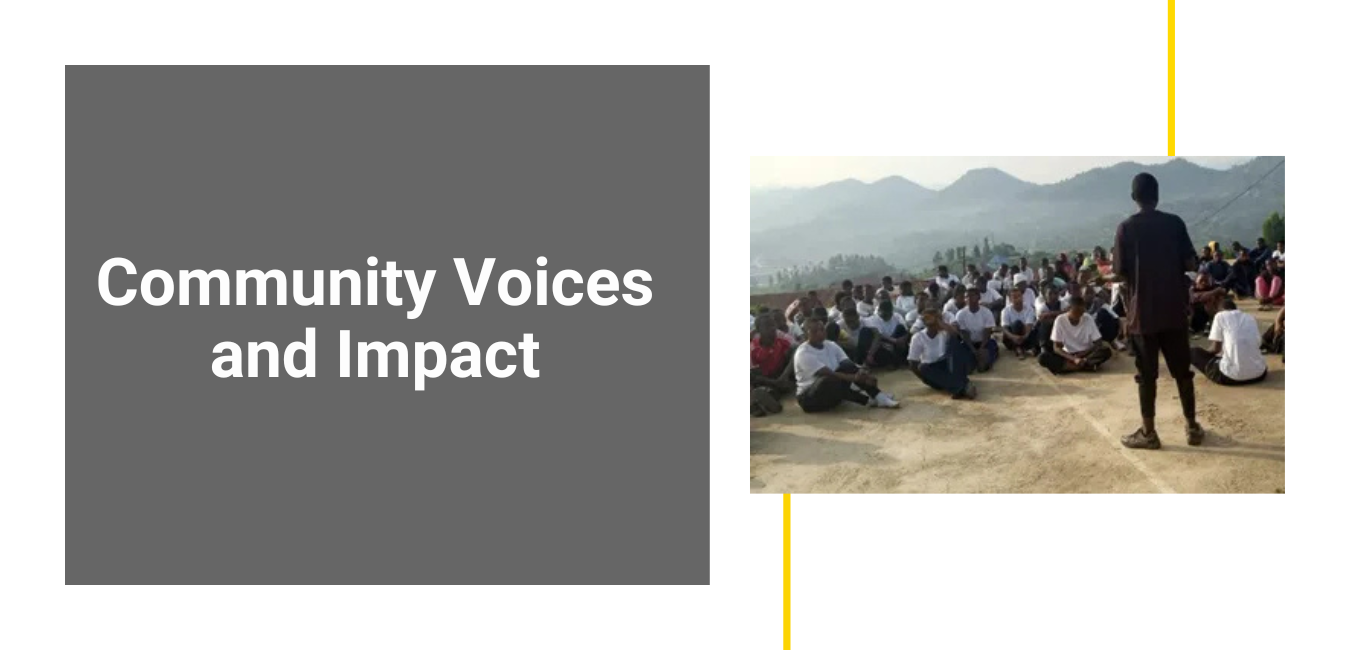
It never ceases to amaze and inspire me as to how much reach Teach2030 has throughout the world, and I am extremely proud to be a part of enabling teachers worldwide to improve their teaching experiences and as a result, improve the learning of the students they teach. I feel humbled to know that we are helping to support teachers in developing their practice across countries and communities by offering a range of courses on our award-winning platform – Teach2030.
It is also wonderful to hear the voices of teaching professionals worldwide, and how we have shaped their practice in the classroom. Gift Chaoloka from Malawi
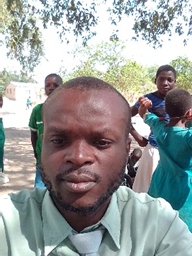
has recently taken Part 1 of our Formative Assessment course and writes I tried Fist to Five and the Red Amber Green (RAG) strategy. Many learners express themselves on content understanding and they fully participated without being shy because previously many learners were shy to express themselves about how they understood the content and it has helped me as teacher to reflect well on my teaching.
Thank you Gift Chaoloka for sharing your experiences and success with these strategies; it is super to hear how your students are feeling more confident and how you feel supported through self-reflection. Very well done.
Azlina Kabir from Bangladesh has also implemented the same assessment strategy and says, I have tried the RAG (Red, Amber, Green) strategy. By this I have come to know how much my students understand the topic and how much effective my teaching was. After that for those who were still not very confident, I revised the lesson. This course is incredibly wonderful. Thank you for your kind words regarding our Formative Assessment course; we are very glad to hear the positive feedback you provide and how you can recognise your success through self-reflection.
Dorcas Sani from Nigeria tells us I used the Red, Amber and Green strategy, I just decided to try out something new. Though challenging at first but it helped me bond with shy students more.
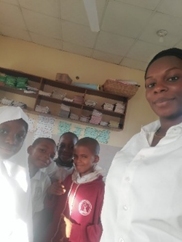
Relationships with students are a key strategy for helping develop the learning and it is great to hear how Dorcas has bonded further with her class – thank you Dorcas.
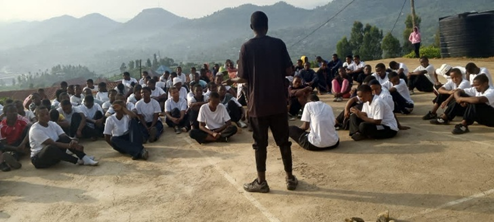
In addition to the teachers mentioned, we have also helped support Moses Hamadila from Namibia and Aimable Gasore from Rwanda with various strategies helping with classroom management and supporting students with their independent learning and growth. Receiving images from our

community is even more inspiring and also humbling – it is extremely uplifting and motivating to hear how we can support you and your students so that students around the world can have access to education and learning opportunities.
Another effective assessment strategy that educators may like to use from our Formative Assessment course are Exit tickets, a method Mihaela Basu from Romania has used and tells us how it was used: Exit Tickets At the end of a lesson, ask students to write a short response to a prompt (e.g., “What is one thing you understood well today?” and “What is one thing you’re still confused about?”). This gives you quick feedback on their learning and helps you plan your next lesson based on what students still need to work on. This is exactly the purpose of the strategy – feedback on learning which has taken place and where the strengths and weaknesses lie, thus informing planning for future lessons.
Mputlana William Mosehlana from South Africa writes I have tried word challenge, it shows me that my learning engagement still needs to be stretched because some of my learners are unable to condense the number of words that I gave them to make summary.
I therefore go back and apply another method and also use active learning during my lessons. There are such a range of strategies for assessing students that you all are testing out, which is great because there is no “one size fits all”. Different learners learn in different ways and as educators we need to ensure we cater to a wide variety of needs that are present in our classrooms. It is important that we nurture a Growth Mindset towards our learners.
This is exactly what Odule Sunday Emeka in Nigeria has been working on and writes very honestly when she says, Difference between ability and attainment. It was quite challenging because as a teacher we are always faced with these tasks of distinguishing between both. However, with the help of this course, improvements will be made and learners will be encouraged to become better. I used to tell my students ‘NO’ but will change to ‘You’re trying and if you keep up the energy, it’ll get better going forward. It’ll assist my learners in improving rapidly and having the eagerness to keep trying having the consciousness that I haven’t written them off. Inspirational words Odule and a very important mindset to have when educating young people.
Beverly Edwards from Grenada has also taken our Growth Mindset course and tells us:
I want to accept that they may be achieving at a lower level, but it is still achievement. I also want to give feedback that can encourage a growth mindset, so students feel free make mistakes while learning. It will impact them positively. It will help to create a safe space for them to learn and also help them to develop a growth mindset. I want to applaud this course it really puts things in perspective for me. I learnt how important feedback is for the growth of students. I hope that teachers are making use of these invaluable courses. Thank you for your kind words, Beverly and we are so very glad that we can be of assistance and a help with your professional development.
We highly recommend having a Learning Partner in all our courses, partners who are invaluable in helping us reflect and develop in our TPD. Valerie Wong in Mauritius writes Having a learning partner was a bit challenging, we do not have the same free time, but I tried to keep the matters of discussion for when this person is free.
I was already using positive feedback when marking my students work, I am now more aware and will surely be more mindful and careful. I think they will know and feel that I have faith in their abilities and that I respect their pace, while pushing them forward for the best.
In India Germain Kazadi Nshimba tells us that it is possible and absolutely acceptable to frequently revisit the courses on our platform, in fact it is an extremely effective form of development, maintaining skills and performance. Germain writes, having taken this course before, I didn’t find it challenging, but it served as a good reminder that we should remain open to continuous learning. It happened that when overwhelmed, I labelled some students. Now, I know for sure that things can change. Indeed, this professional development sets a new beginning, a reason to believe that any change is possible.
Muhammad Nazim Sheikh from Bangladesh writes, The Teach 2030 was a valuable learning experience. It helped me reflect on my teaching style and explore new ways to engage students more effectively. The content was clear, flexible, and practical, making it easy to apply the concepts in real classrooms. Overall, the course enhanced my confidence and encouraged me to become a more reflective and student-centred teacher.
It is our honour and privilege to be able to support teachers worldwide with their teaching practice and professional development. It is heart-warming and extremely encouraging to hear voices from our community of members on how Teach2030 has supported their teaching practice and knowledge of the profession. Thank you Helen Hoke from Vanuatu, an island in the South Pacific where Teach2030 has also extended its reach.

We look forward to more of your voices telling of how Teach2030 courses have affected you through filling out the course surveys at the end of the course. It is always amazing to see your photographs, putting faces to names and seeing what it is like teaching in your communities. Thank you all who have contributed their experiences and please continue to do so.
