
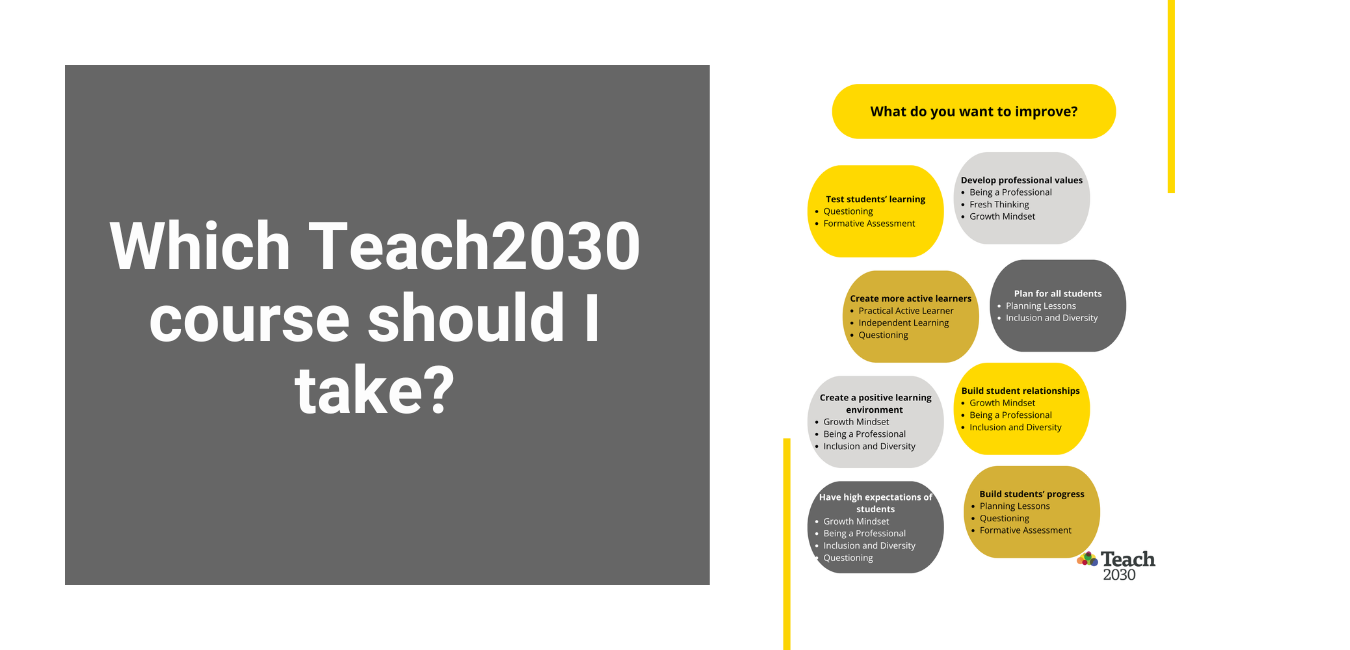
Here at Teach2030, we offer 9 different courses that are aligned to the Cambridge Teaching Standards, alongside a Digital Learner course to build digital literacy. It can be hard to decide where to begin, so deciding where to start your professional development can feel overwhelming.
At Teach2030, all of our Online Teacher Professional Development courses are thoughtfully divided into Part 1 and Part 2, with Part 1 focusing on theory and Part 2 providing practical skills for the classrooms. They’re designed to elevate teacher quality across all learning environments—regardless of age or subject.
So, how do you know where to start?
On signing up, you’ll be automatically enrolled into all Part 1 courses, including An Introduction to Teach2030. This gives you a clear overview of how the courses are structured and exactly what is required for each one, so this is a good place to start. Once you’ve completed it, you’ll have your teacher portfolio ready to fill with all the knowledge and skills that you’ll learn on the other courses.
Now, let’s breakdown the 9 teaching courses to help you choose the best path:
1. Growth Mindset – get to grips with creating a growth mindset to enable a positive and productive approach to learning in your classroom.
2. Fresh Thinking for Your Classroom – whether you are experienced or completely new to teaching, this course will help you reflect on and elevate your everyday classroom practice.
3. Practical Active Learning for Your Classroom – do you feel like you lead every activity in the classroom? Learn how to make your students become more active participants in your lessons.
4. Planning Lessons to Reach all Learners – good planning ensures all learners benefit. Take this course to improve all aspects of your planning, from lesson objectives to dynamic activities.
5. Being a Professional Teacher – this course helps you become more organized in how you present yourself as an educator, allowing you to establish high standards and gain the trust of your school community.
6. Independent Learning – introduce ways to make your learners more engaged. We define independent learning and how it differs from traditional whole-class learning.
7. Asking Questions in the Classroom – find out how to plan and ask more effective questions. Your students will begin to think more deeply and become naturally more inquisitive.
8. Formative Assessment Strategies – do you understand what your students know? Learn 7 new strategies to help assess in the classroom.
9. Inclusion and Diversity – discover your students’ identities and how to adapt your planning, language and behaviour to make them feel more included. Learn different strategies to use in the classroom to encourage tolerance.
All our course objectives are on the Online Teacher Courses page.
To help a little more, here is another way to help choose:
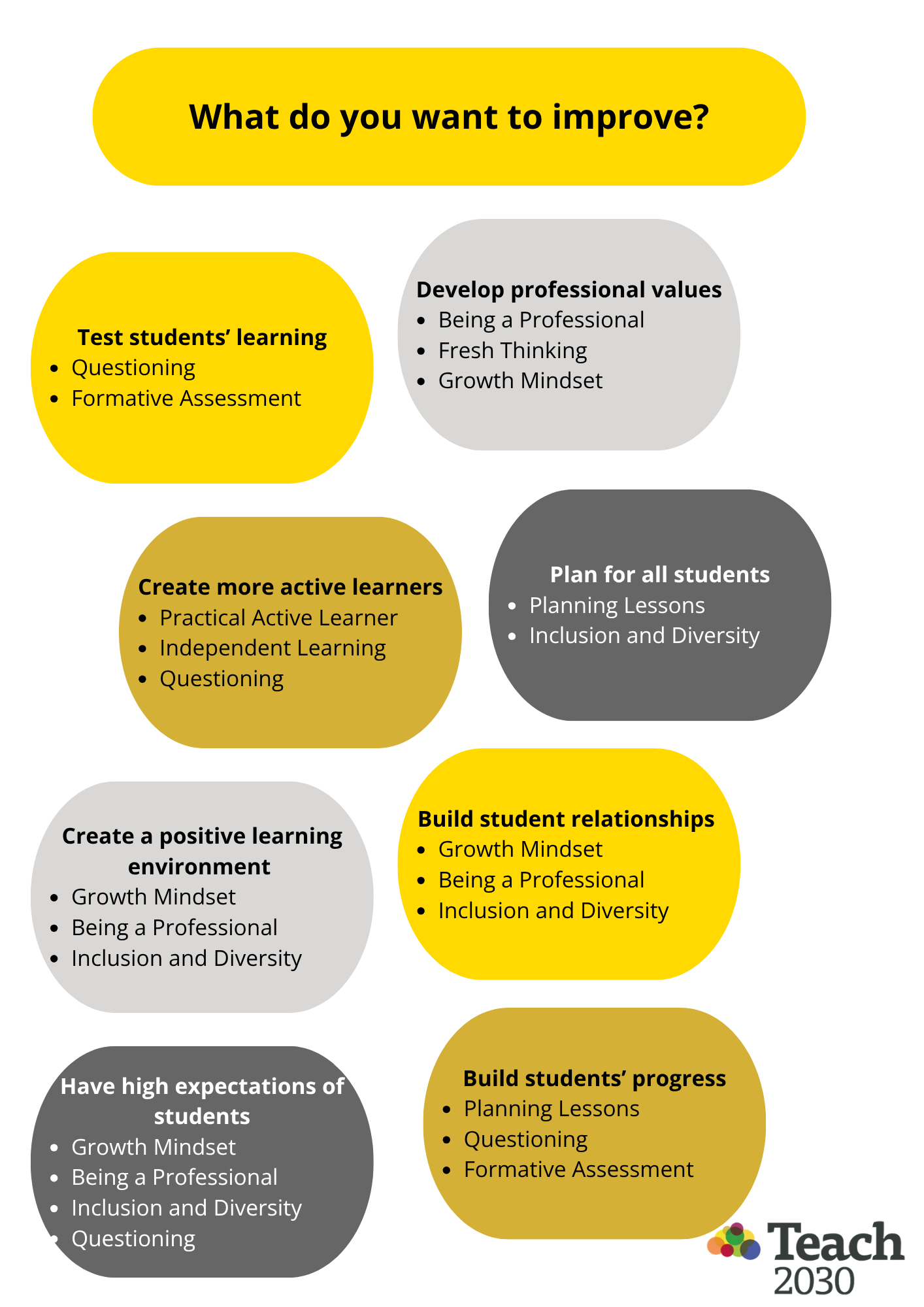
Still stuck on which teaching course to start with? Comment below and we can advise you, just tell us:
- What is your primary teaching goal or challenge right now?
