
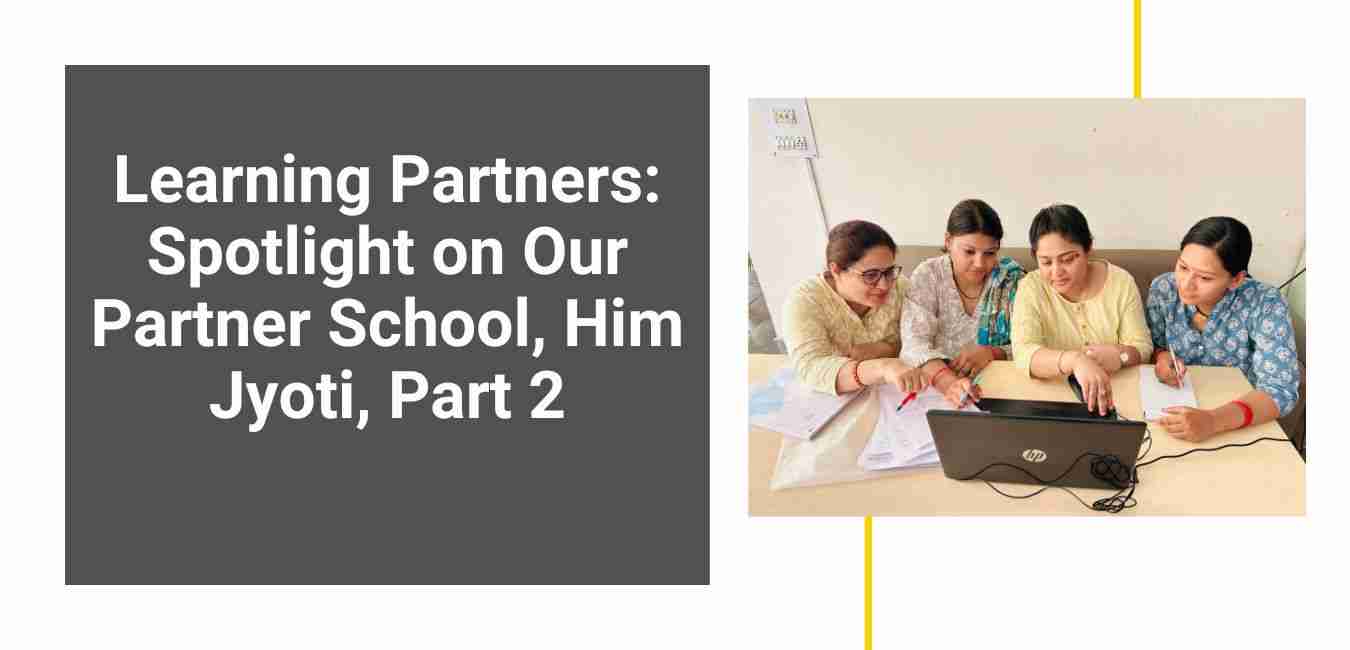
At Teach2030, we promote learning together. Often, we are not alone in our thinking and our experiences. There are likely to be many other teachers thinking and feeling exactly as you do – so how can we make this better? We can communicate more with each other by establishing a Learning Partner relationship.
There are many levels to working with a learning partner; initially simply an informal chat about what you have just delivered, whether you felt the learners made progress; or how they could make even more. Chatting about teaching strategies is a secure and safe way to explore alternative ideas or methodologies as well as establishing trust with another person who is going through a similar experience.
Him Jyoti is an all-girls school in Dehradun, India, with 280 girls and approximately 25 teachers; their teachers are passionate and caring for their students, so much so that they frequently undertake Teach2030 TPD to further their skills and understanding of pedagogy in the classroom. They’ve been focusing on working with a learning partner to improve their teaching and classroom practice.
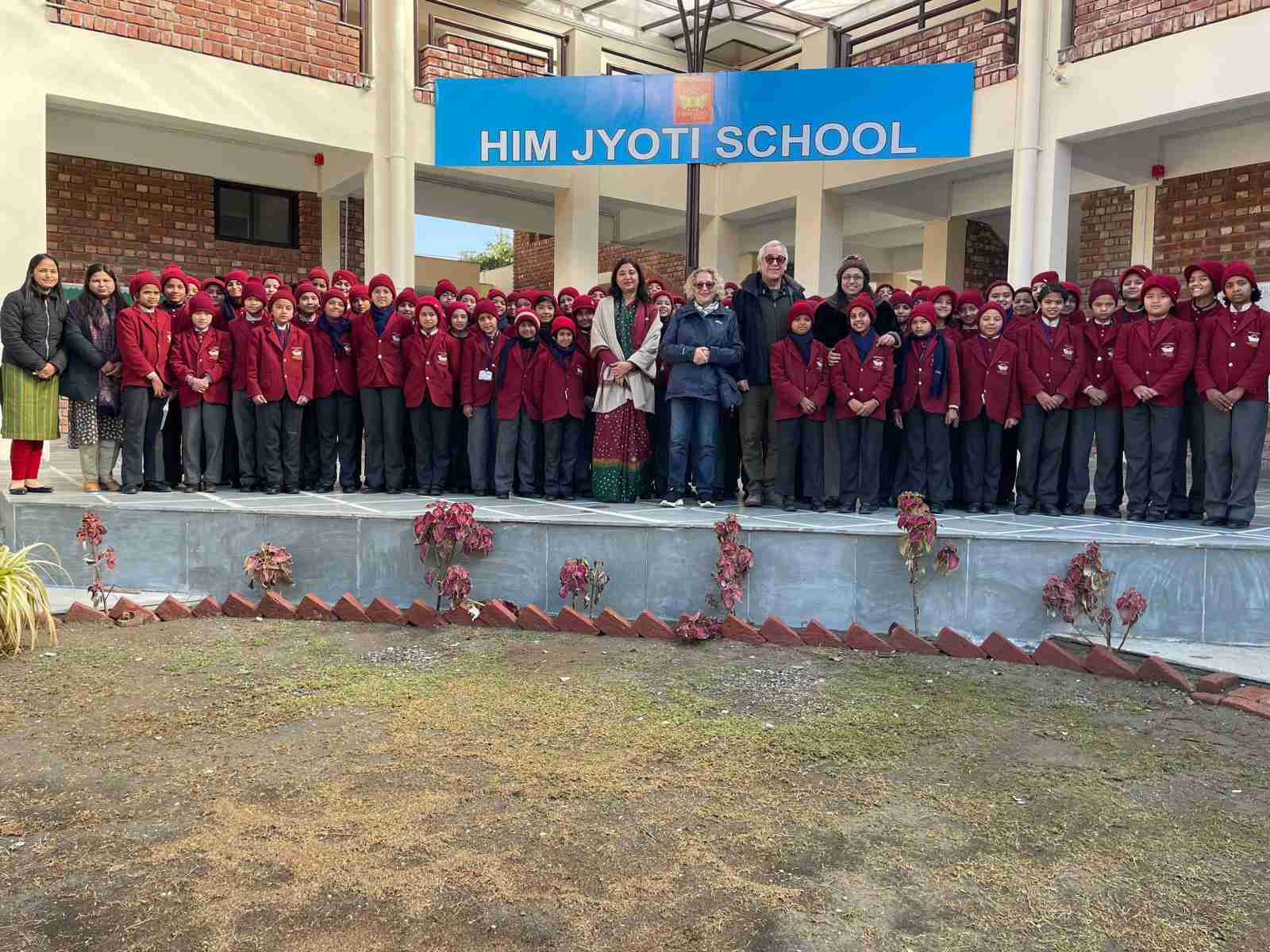
Dinesh Rawat, teacher of mathematics, tells us
‘Mr. Anil and I had a great conversation about giving feedback that focuses on effort and growth rather than just results. We also talked about how to celebrate progress and help students see mistakes as learning opportunities. He showed me how he does this in his own class, which was really eye-opening. He also shared a bunch of hands-on activities, lesson plans, and other resources that I could try, which was super helpful. We sat in on each other’s lessons and gave feedback on how we were using practical learning strategies. This was one of the most valuable parts – it helped me see where I could improve, and Anil’s feedback was always positive and constructive, making it so much easier to tweak and refine my approach.’
For Anil Thapa, a teacher of Mathematics,
‘A fellow teacher observed my lesson on decimals and suggested using a real-life money exchange activity to make it more
interactive. I shared a set of Maths puzzles with a colleague, and in return, I received worksheets on problem-solving strategies.’
Ms. Geeta Samant, teacher of English and economics says that
‘Throughout the Teach 2030 journey, I had the opportunity to collaborate closely with my peer partner, Neha Topal, who teaches Computer Science. We frequently discussed various teaching methodologies, exchanged ideas, and designed engaging activities to make our lessons more student-centered. One of our most successful collaborations involved creating interactive case studies where students had to apply economic concepts to real-life scenarios. This approach not only enhanced student engagement but also made learning more meaningful for them.
Another valuable aspect of our peer support was conducting mutual classroom observations. Neha ma’am and I visited each other’s classes to observe questioning techniques. After each session, we engaged in reflective discussions, providing constructive feedback on how we framed questions to stimulate critical thinking among students. I particularly benefited from her insights on using open-ended and follow-up questions to encourage deeper analysis. Her feedback helped me refine my questioning style, making my lessons more interactive and thought-provoking for students. Additionally, this practice strengthened our professional bond and created a supportive learning environment for both of us.’
Meanwhile her partner, Neha Topal, teacher of computer science and AI tells us in return
‘We discussed how to give feedback that focuses on effort and process rather than just results, and how to celebrate progress and learning from mistakes. Geeta showed me how she does this in her own class, which was really helpful. She also gave me lots of ideas for hands-on activities and shared lesson plans and other resources I could use. We observed each other’s lessons and provided feedback on how we were implementing practical learning strategies. This was super helpful because it helped me see where I could get better. Her feedback was always constructive and supportive.’
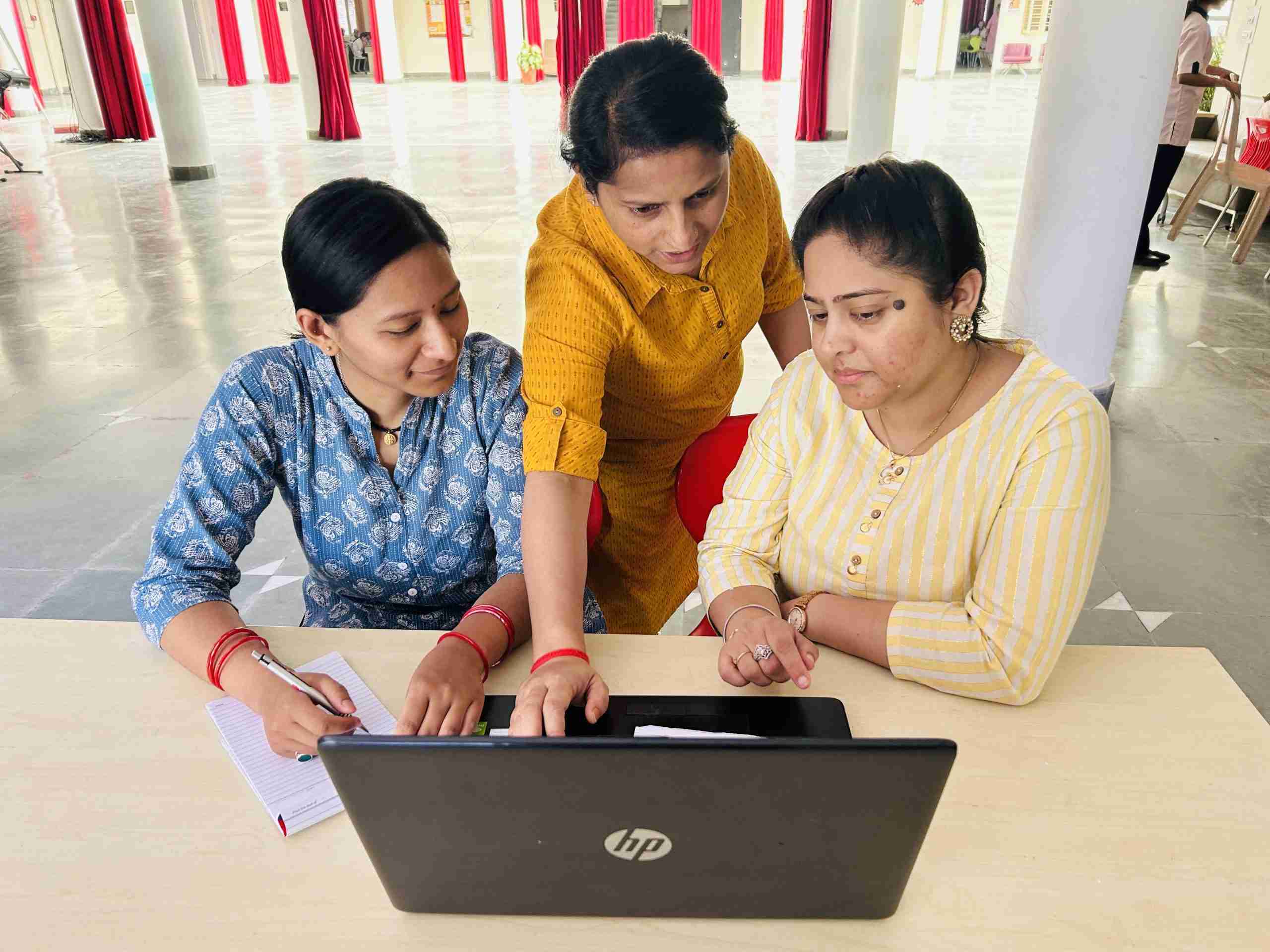
It is sometimes hard to know how effectively we are teaching. We can often tell from our students’ responses and reflecting on our lessons/lessons plans is useful. But, a key activity for monitoring how well we are embedding new teaching strategies that we have learnt from Teach2030 courses is through lesson observations. These can be both formal and informal. In informal observations, teachers are invited to pop into another classroom for a short period of time – perhaps 10 minutes. Perhaps a teacher is trialling a strategy and needs help to see whether they are completing it effectively. They will ask another teacher to go in to see how well they are doing this and to provide advice on how to do it better. There will be no judgement. It is a supportive measure between two teachers who are equal in status. It’s clear to see how Him Jyoti teachers have benefitted from informally observing each other!
Have you got a learning partner that you want to thank? Leave a comment below telling us how they have helped your practice!
To take our courses, enrol today for free!
