
For many learners around the world, digital education does not begin with a laptop or a well-equipped classroom. It begins with a smartphone.
That is why stories like Chanchala Imanthi’s matter.
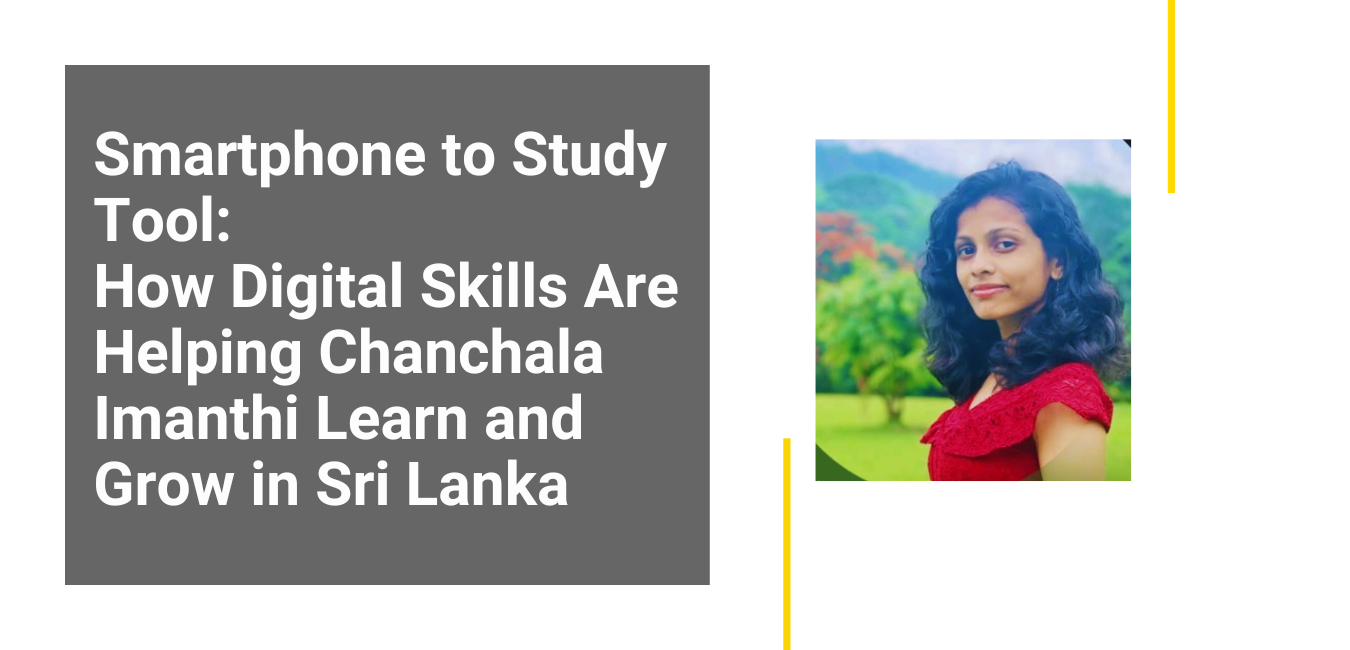
A student at the University of Peradeniya in Sri Lanka, Chanchala recently completed the “Become a Digital Learner: Using Your Smartphone (Beginner)” course offered through Teach2030 by The Commonwealth Education Trust. Her achievement is more than a personal milestone. It is a reminder that with the right support, everyday technology can become a powerful gateway to learning, confidence and opportunity.
In many communities, access to computers, reliable broadband or formal digital training remains limited. For students, teachers and aspiring educators, the smartphone is often the most available — and sometimes the only — digital device they have. Yet owning a smartphone is not the same as knowing how to use it effectively for learning.
That is where digital skills become essential.
Through this beginner-level course, Chanchala developed practical skills that are increasingly important for anyone seeking to learn, teach or grow in a digital world. She explored what digital learning really means, built her understanding of key digital terms, learned how to find and judge online information, and discovered how to use her smartphone as a genuine learning tool rather than simply a device for communication.
These are not small skills. They are foundational.
They help learners become more independent, more confident and better equipped to take charge of their own development. They also matter greatly for teachers and future teachers, who are increasingly expected to access training, engage with online resources, communicate digitally and support learners in new ways.
For someone like Chanchala, this certification represents progress in her own academic and professional journey. But her story also speaks to a much wider need. Across many parts of the Commonwealth and beyond, millions of learners and educators need support to build the digital confidence required to participate fully in modern education. When those skills are developed through accessible, mobile-first learning, the impact can be immediate and far-reaching.
Chanchala’s experience shows that digital inclusion does not always require expensive infrastructure or complex systems. Sometimes it starts with helping someone see the potential of the device already in their hand.
At the Commonwealth Education Trust, this is part of a wider commitment to making quality learning more accessible. Courses like Become a Digital Learner: Using Your Smartphone help remove barriers and open up practical pathways for self-study, professional development and lifelong learning.
We celebrate Chanchala Imanthi for taking this important step. Her success reflects the determination of so many learners who are embracing technology not just to keep up, but to move forward.
And it is a timely reminder: when we equip learners and teachers with digital skills, we do more than teach them how to use technology. We help them unlock new possibilities for education, growth and opportunity. The course can be accessed here
