
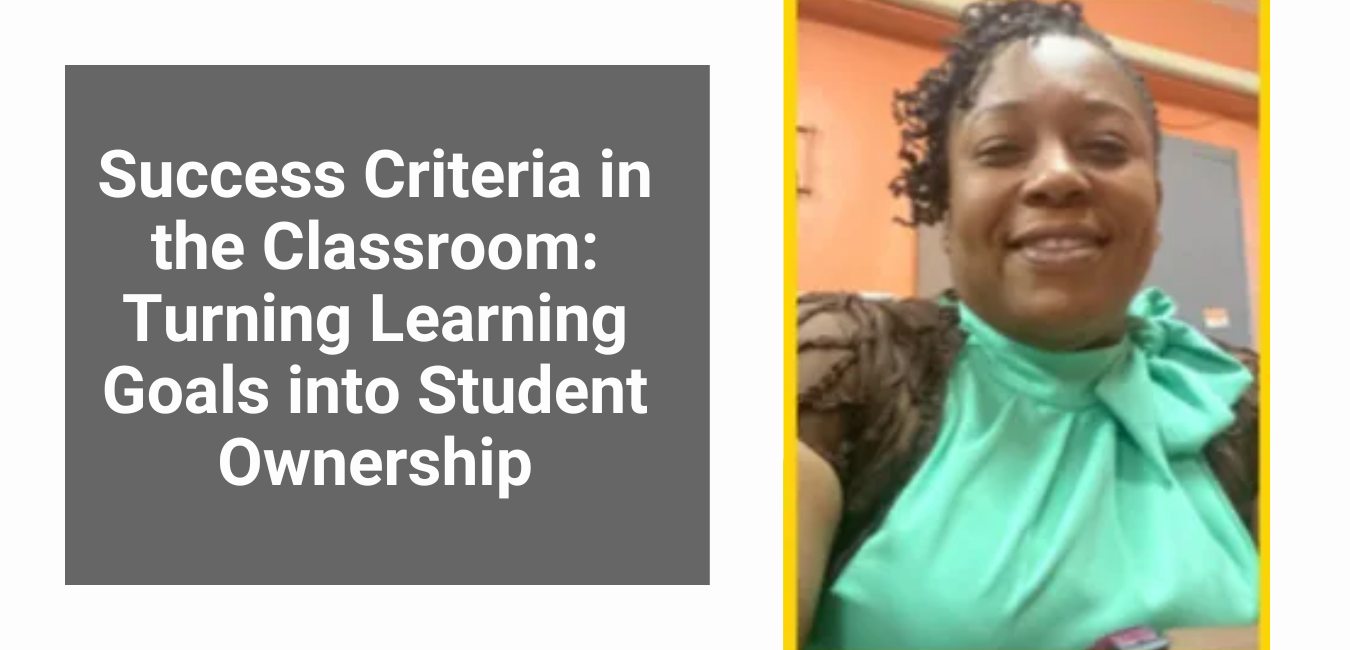
by Alicia Soares, Teach2030 Ambassador, Jamaica
In today’s classroom, learning is most powerful when students understand not only what they are learning, but how they can be successful. This is where success criteria plays a critical role. Success criteria clearly describe what success looks like for a lesson or task and give students a roadmap to follow. When used effectively, it transforms learning from something that happens to students into something they actively engage in and take ownership of.
What Is Success Criteria?
Success criteria are specific, student-friendly statements that explain what students need to do to achieve the learning intention or objective. While learning intentions tell students what they are learning, success criteria show them how to get there. In my classroom, success criteria act as a bridge between the lesson objective and student understanding.
Rather than overwhelming students with broad or abstract objectives, I break learning intentions down into manageable, actionable steps that students can understand and apply immediately. This helps reduce anxiety, increases confidence, and supports all learners, especially those who need structure and clarity.
Breaking Down Learning Intentions into Student-Friendly Steps
When introducing a lesson, I begin by sharing the learning intention in simple language. I then work with my students to unpack it into smaller steps. These steps are written using clear, age-appropriate language and often start with phrases such as:
- I can explain…
- I can identify…
- I can show…
- I can solve…
For example, instead of presenting a complex writing objective, I might break it down into steps like:
- I can write a clear topic sentence
- I can give at least two supporting details
- I can check my work for punctuation and spelling
By doing this, students know exactly what is expected of them and can track their own progress throughout the lesson. I also model each step, so students can see what success looks like in practice.
Using Success Criteria to Support Diverse Learners
Success criteria has been especially effective in supporting students with varying needs and learning behaviors. For instance, Zuri is a student who often struggles with motivation and does not always enjoy completing tasks. By using success criteria, I am able to focus her attention on one small step at a time rather than the entire task. I intentionally encourage her, praise her efforts, and reward her progress as she completes each step. Celebrating these small wins has helped build her confidence and gradually increase her engagement in learning.
Similarly, Devonte displays behavioral traits that can sometimes interfere with his learning. Through careful planning and the use of clear success criteria, I am able to structure lessons in a way that reduces frustration and promotes positive behavior. By knowing exactly what he is expected to do and what success looks like, Devonte has been adjusting well and showing improvement both academically and behaviorally.
Guiding Self-Assessment and Student Feedback
An important part of using success criteria effectively is teaching students how to self-assess. Throughout the lesson, I regularly refer back to the success criteria and ask students to reflect on their progress. I may ask questions such as:
- Which step have you completed?
- What do you need help with next?
- Which part of the success criteria do you feel confident about?
Students are encouraged to use checklists, thumbs-up signals, or simple reflection statements to assess their own work. This builds independence and helps them develop a growth mindset.
In addition, I create opportunities for students to provide feedback, both to themselves and to others. Peer discussions, partner sharing, and short reflections allow students to talk about what worked well and what could be improved. I guide these conversations carefully so feedback remains respectful, constructive, and connected to the success criteria.
Conclusion
Success criteria is more than a classroom strategy—it is a powerful tool that empowers students to understand their learning, take responsibility for their progress, and believe in their ability to succeed. By breaking learning intentions into actionable steps, guiding self-assessment, and encouraging meaningful feedback, I create a supportive and structured learning environment where all students, including those like Zuri and Devonte, can grow academically and socially.
When students know what success looks like, they are far more likely to achieve it.
